How to choose the right bottle cage for road and gravel bikes

Nicola Checcarelli
Index
- 1.Come scegliere il portaborraccia giusto per bici da corsa e gravel
- 2.Carbon vs polyamide
- 3.The road bike bottle cage: balancing lightness and retention
- 4.What the Pros choose
- 5.Gravel, bikepacking and MTB
Come scegliere il portaborraccia giusto per bici da corsa e gravel
Most cyclists choose a bottle cage based solely on aesthetics and, secondly, on weight and price. In reality, there are other very important aspects to consider, such as retention and ease of insertion/removal.
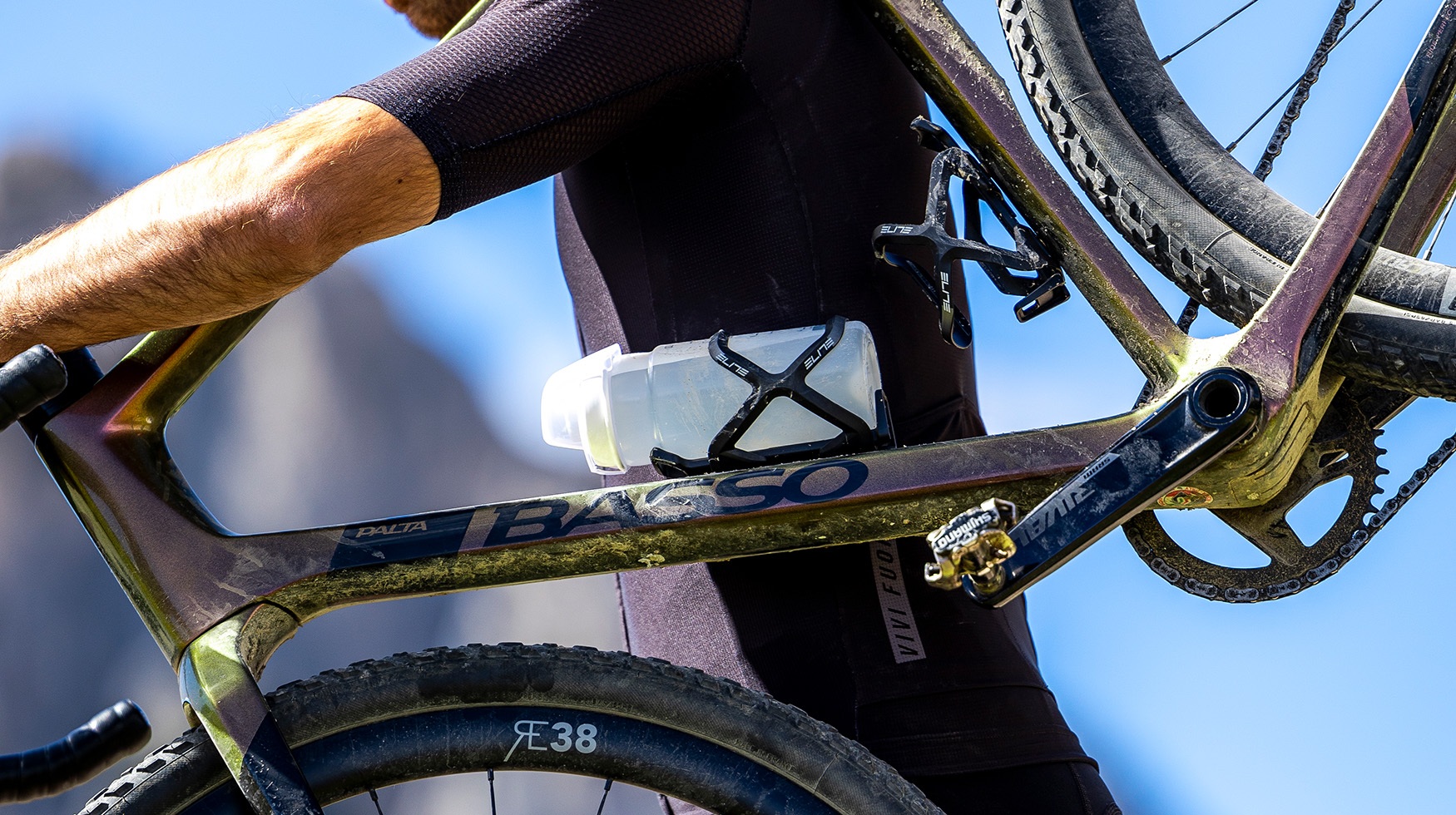
Priorities differ between road bikes and the off-road world (gravel and MTB), which is why there are bottle cages better suited to road use and others more specific for gravel or bikepacking.
Apart from these differences, all recent models are significantly more reliable and high-performing than in the past.
Just consider that in recent years, despite rough road surfaces, it has become increasingly rare to see bottles bouncing out: this is no coincidence, but the result of small details refined over time that have improved even such a “delicate” accessory.
Carbon vs polyamide
The first distinction to make concerns the material used to manufacture the bottle cage.
In general, you’ll find products made of carbon fiber or polymeric materials such as polyamide (plastic).
The main differences are primarily related to weight and price.
Carbon bottle cages are significantly lighter, but also more expensive, and remain the premium choice. However, modern composite materials now make it possible to produce highly effective bottle cages at more affordable prices.
When it comes to retention, more than the material itself, what really matters is:
- the design of the structure
- the elasticity of the cage
Carbon bottle cages are aimed at those seeking maximum lightness and wanting to add an extra touch of exclusivity to their bike.
Bottle cages made from plastic or composite materials represent an excellent compromise in terms of aesthetics and weight, with a lower price point. In addition, in most cases, they offer a wider range of color options.
The road bike bottle cage: balancing lightness and retention
On a road bike, low weight remains a key factor, but when it comes to bottle cages, the truly decisive element is the balance between lightness and retention.
In recent years, small improvements in design and attention to detail have made it possible to achieve an ideal compromise between these two needs.
Road cycling—especially in racing—is also synonymous with high speed. For this reason, quick access and ease of use are other essential factors.
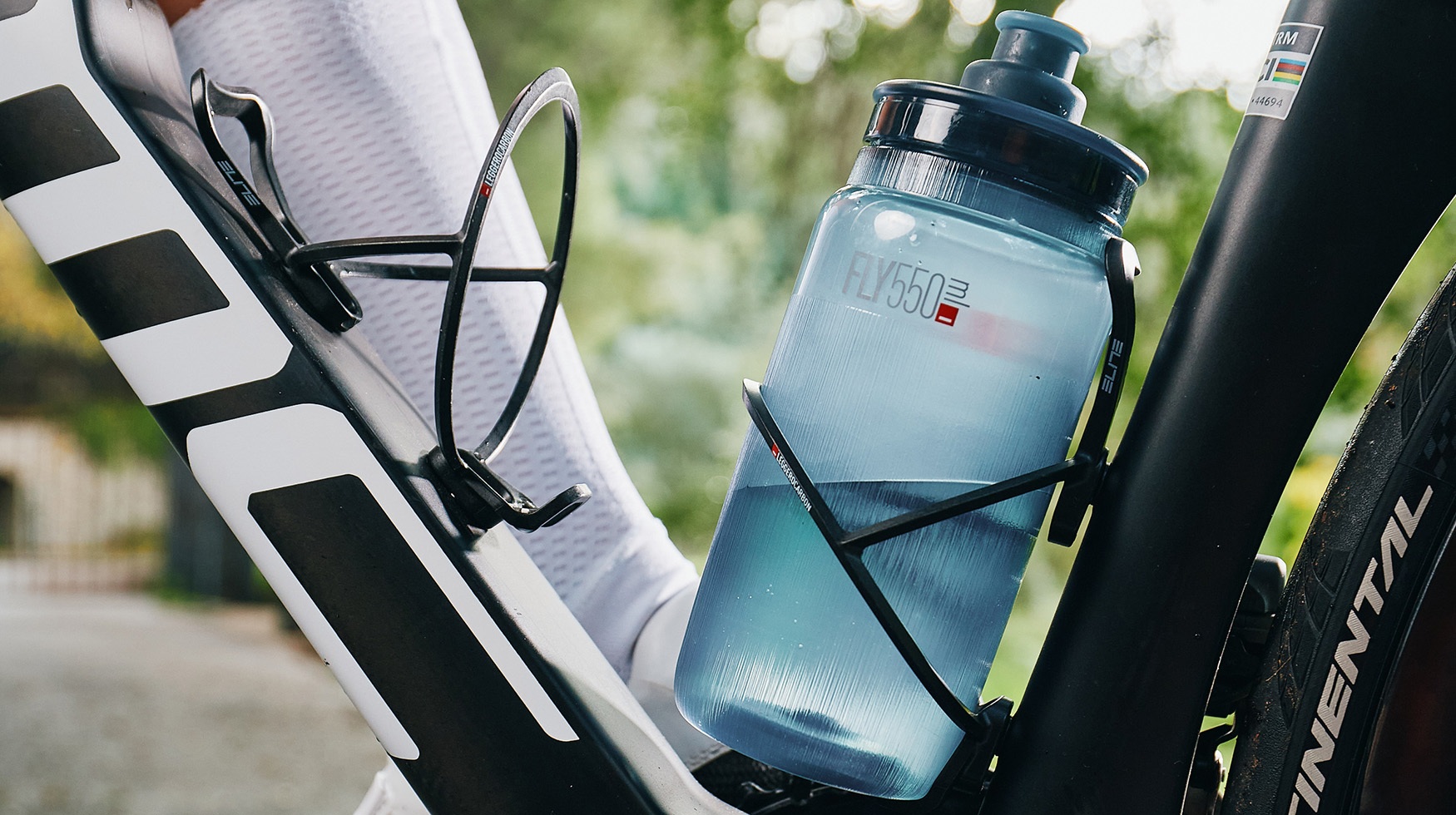
The shapes of the Leggero Carbon and the Custom Race X, two of Elite’s best-selling products, have been redesigned with this in mind, making insertion and removal easier even with very small frames or in hectic situations.
In short, the ideal bottle cage for a road bike must be:
- lightweight
- stable even on rough surfaces
- easy to use, even at high speed
- with a racing aesthetic (which never hurts)

What the Pros choose
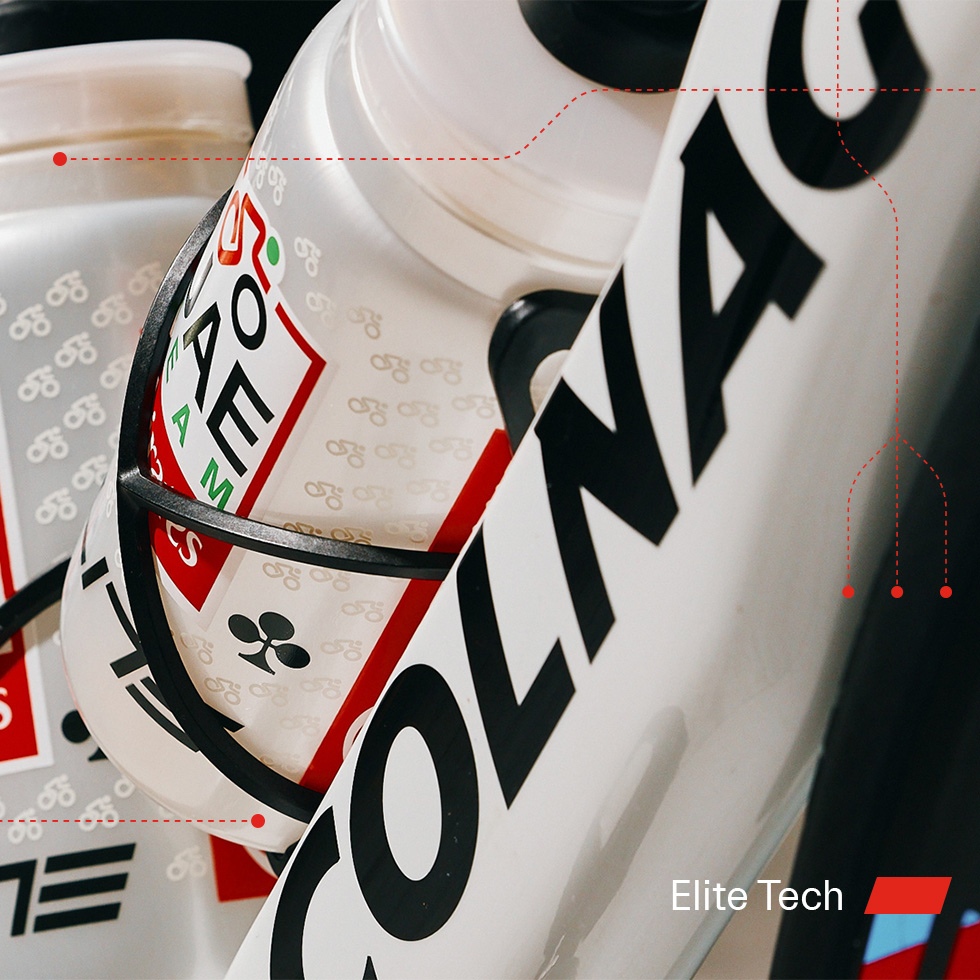
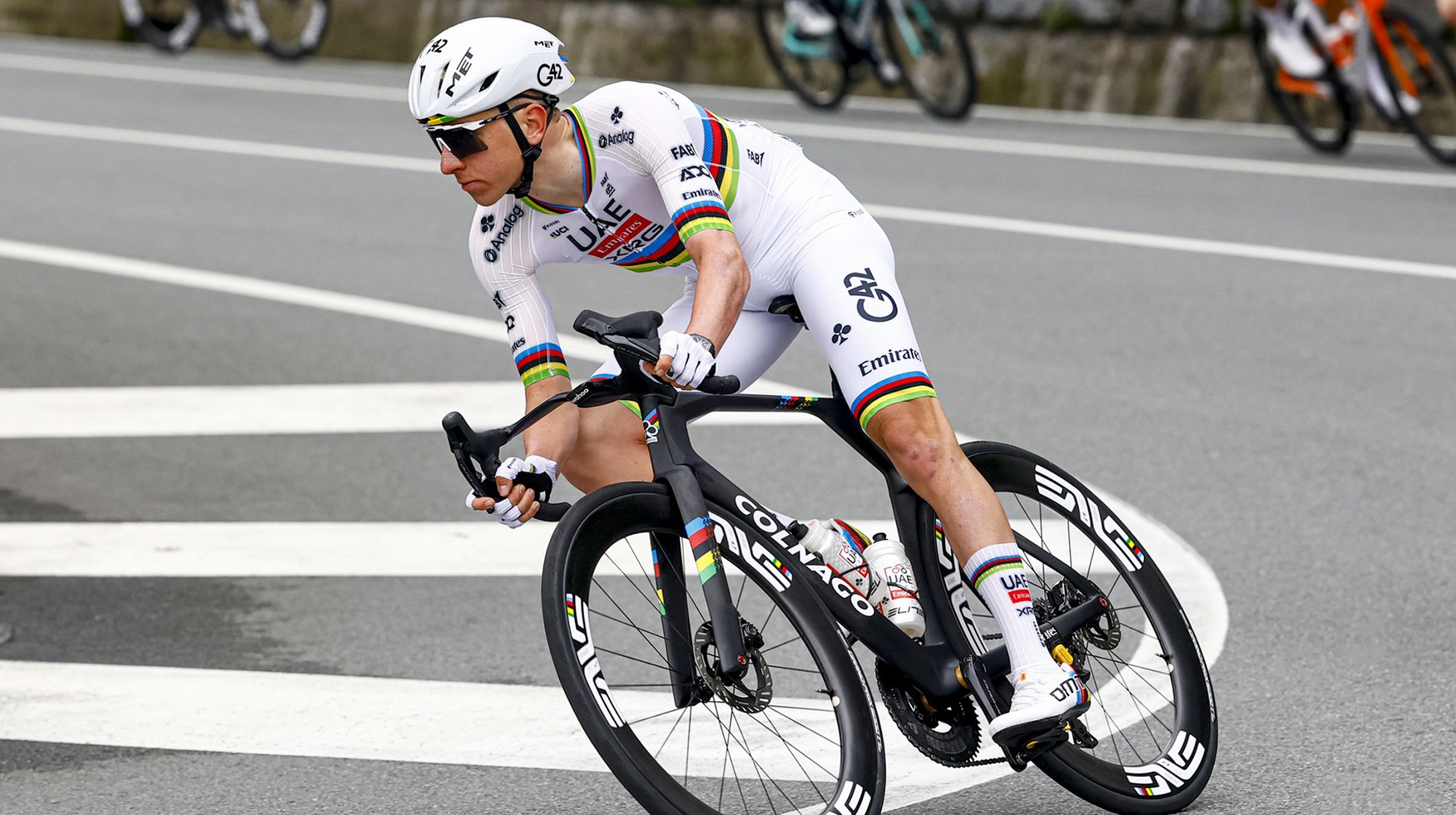
The most widely used bottle cage among professionals—including Pogačar—is the new Leggero Carbon, which offers extremely low weight (just 13 g), excellent bottle retention thanks to its shape and the ribs integrated into the inner structure, and quick, easy insertion and removal even in demanding situations.
There’s also an interesting anecdote about Pogačar and the new Leggero Carbon. Tadej is very attentive to detail and the weight of his bike, and intrigued by its record-low weight, he started testing the first prototypes well before the official launch. Just a few days later, the entire team was asking to use it in races—not only in training—so Elite was forced to bring forward its launch and start production several months ahead of schedule.
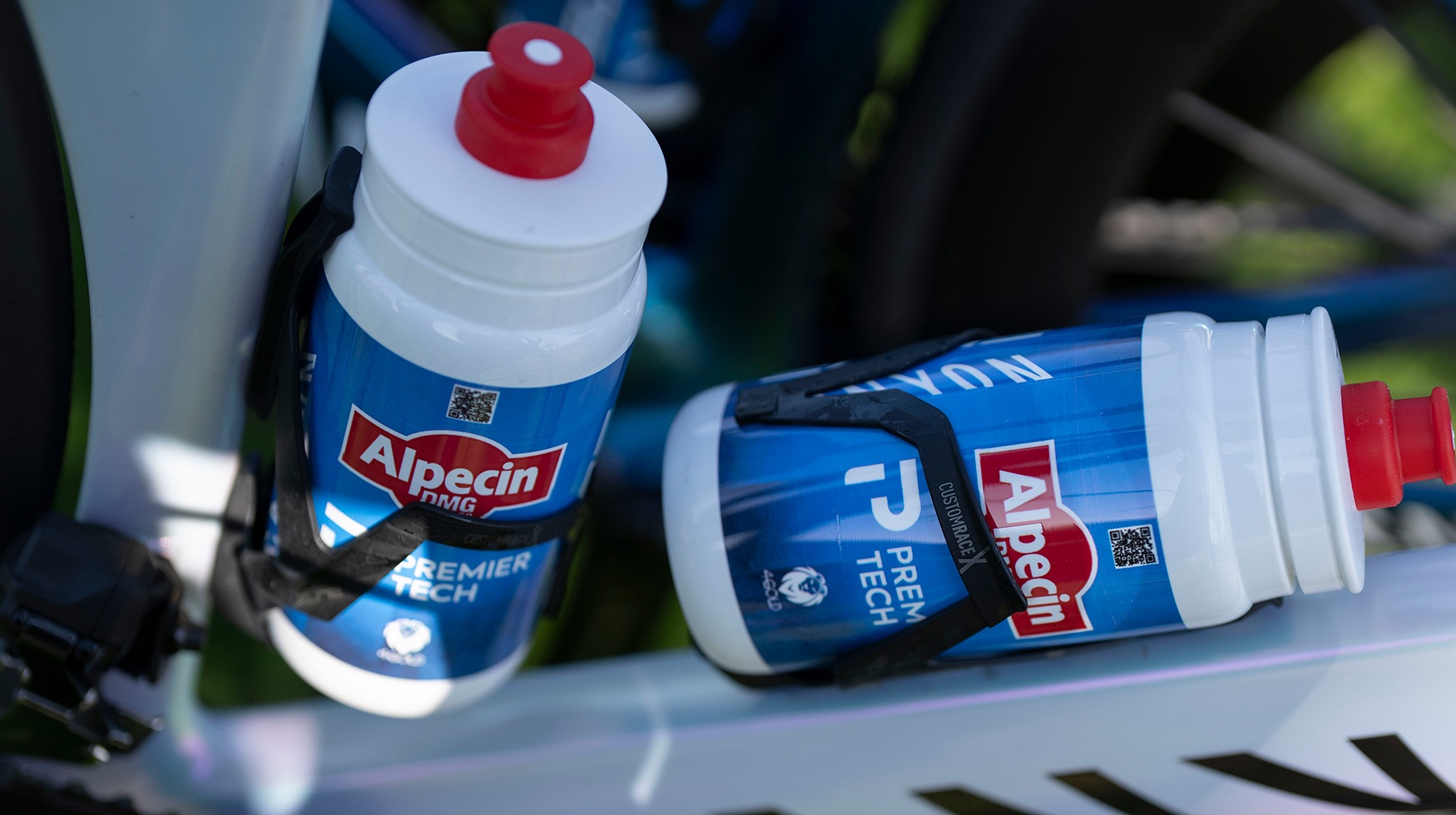
Speaking of champions, Mathieu Van der Poel and the entire Team Alpecin–Premier Tech usually don’t use carbon bottle cages, but instead prefer the new Custom Race X.
Why? They prioritize security and slightly higher retention (with a weight increase of only 15 g per cage), as they focus more on Classics and sprint stages rather than climbs-heavy races.
Gravel, bikepacking and MTB
Off-road riding brings significantly different priorities compared to road cycling.
Weight still matters—especially for those who race—but in off-road conditions what really counts is having:
- a bottle that stays securely in place in any situation
- easy access, even with frame bags mounted or on small full-suspension MTB frames
To meet these needs, in recent years Elite has introduced two highly specific products:
Ambo is a side-entry bottle cage made in two pieces, featuring a cage that can be reversed 180°. This particular design means you don’t have to choose the bottle entry side at the time of purchase (as is the case with Prism), but can decide it later on.
It’s a product designed for anyone who struggles with limited space when inserting or removing the bottle—for example, gravel riders using bags under the top tube, or those riding bikes with small frames and therefore a very compact main triangle.
Struka is a distinctive bottle cage equipped with a micrometric adjustment system, designed for those seeking maximum retention without prioritizing speed of use.
It is not aimed at competitive use, but rather at bikepacking and cycle touring.
For those looking for optimal retention and ease of use with a more racing-oriented approach, the range still includes the Rocko Carbon and the Cannibal XC Bio-Based, which have long been used by many professional teams on both road and MTB.