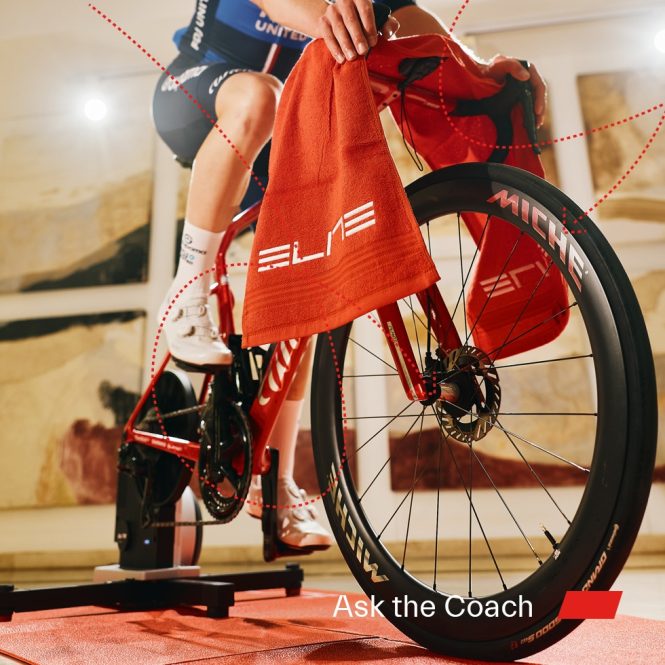
How long should an indoor trainer workout last to be effective?

Bikeitalia
Index
- 1.How long should an indoor trainer workout last to be effective?
- 2.Quality or Quantity? The challenge of indoor cycling
- 3.Training goals: intensity or endurance?
- 4.The role of perceived effort
- 5.Conclusion
- 6.References
How long should an indoor trainer workout last to be effective?
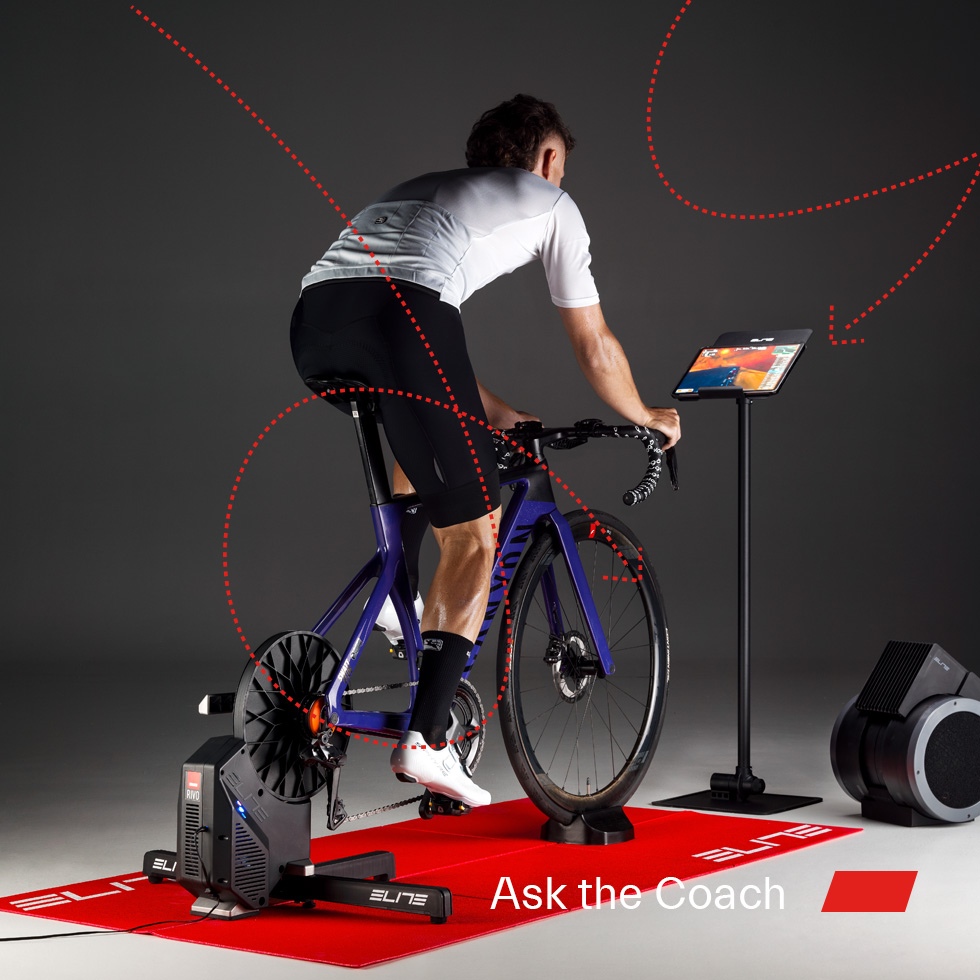
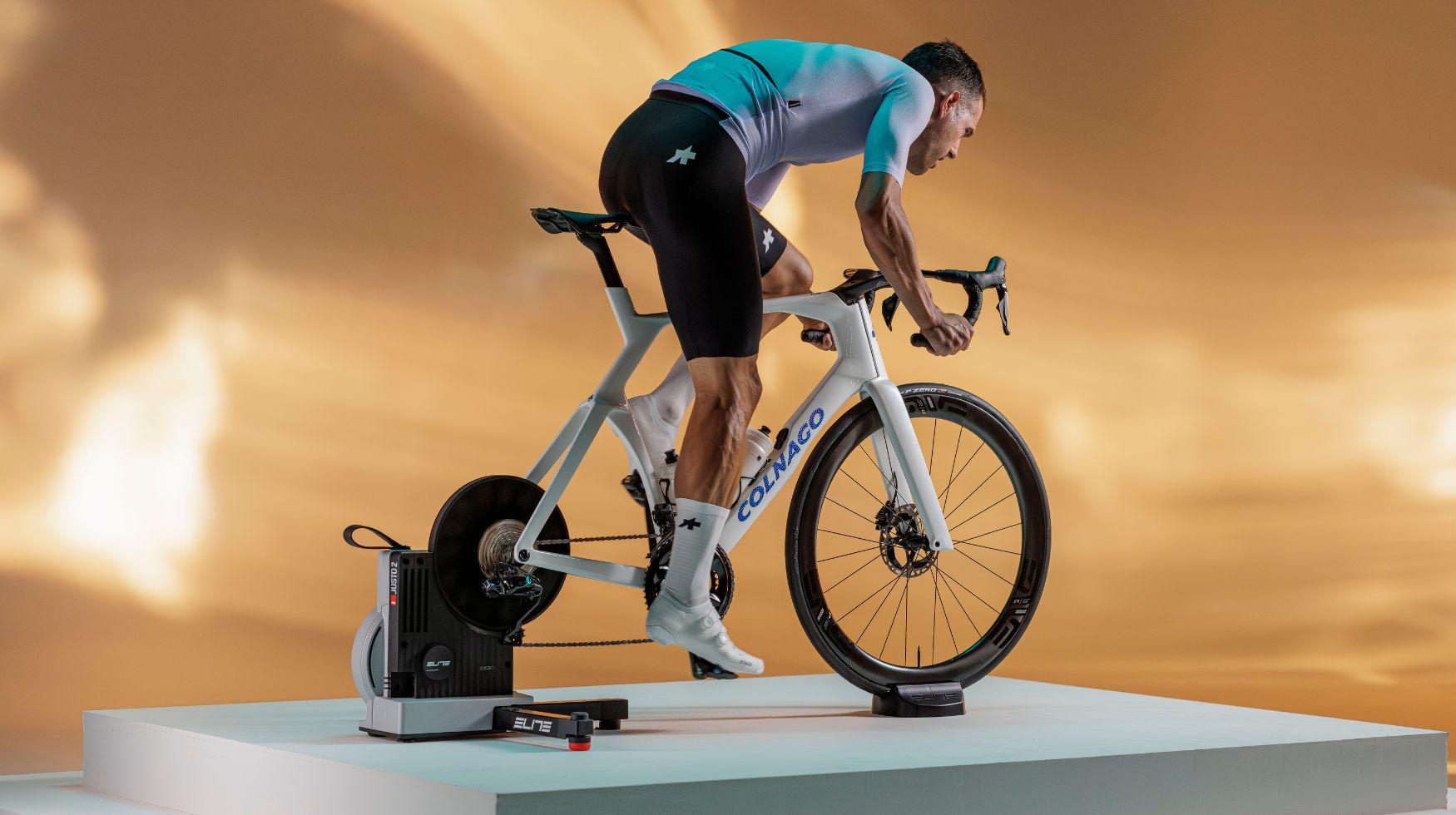
With the arrival of winter or on rainy days, indoor cycling becomes a valid alternative to training outdoors. Indoor trainers or smart trainers now offer highly customizable experiences and realistic simulations. But one crucial question remains for many cyclists: how long should an indoor trainer session last to be truly effective?
Sometimes cyclists think in absolutes, and one common belief can be summed up as: “if it lasts less than 2 hours, it’s useless.” But is that really the case?
Quality or Quantity? The challenge of indoor cycling
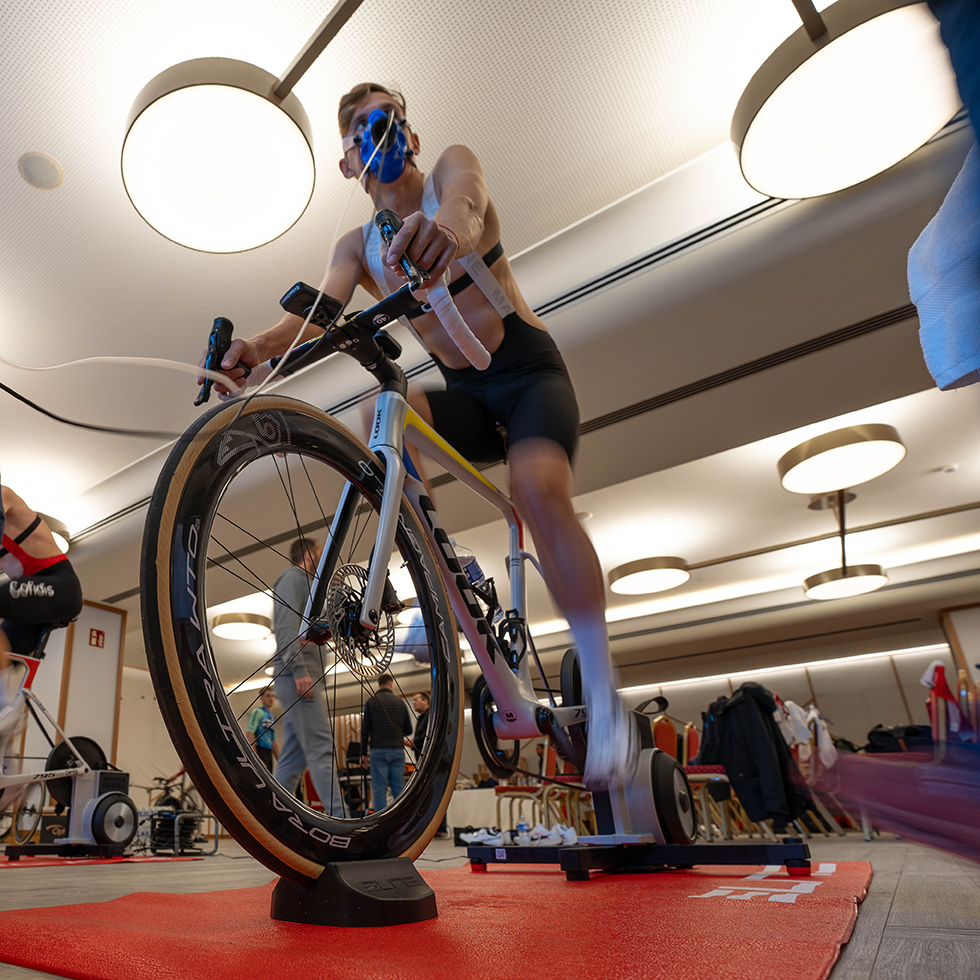
Indoor training sessions are characterized by greater efficiency compared to outdoor riding. The absence of traffic lights, coasting on descents, and interruptions makes it easier to maintain consistent target power. According to a 2017 study, the effectiveness of a 45‑minute high‑intensity indoor session can be comparable to that of a 60–75 minute outdoor workout. Indoor trainers provide denser training stimuli in less time.
From this, we can understand that 40–60 minutes on the trainer can be enough if the workout is well structured.
Training goals: intensity or endurance?
The duration of your workout should depend on your objectives:
- If you want to train aerobic endurance, 60–90 minutes are ideal to stimulate fat metabolism and capillarization.
- If your goal is to improve lactate threshold and VO₂max, 40–50 minutes are enough, as long as the workout includes high‑intensity intervals.
- If the objective is active recovery, even 30 minutes of easy spinning can be sufficient.
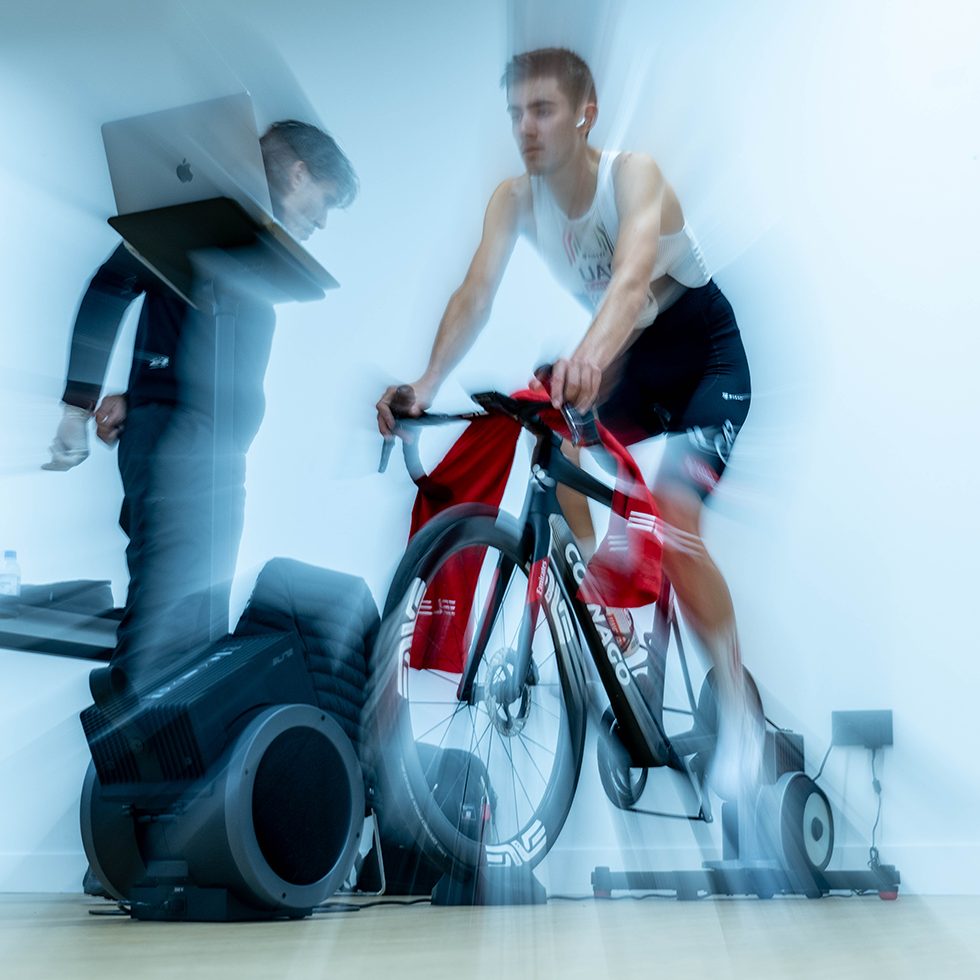
A 2019 study highlights that cyclists following a structured indoor training protocol achieve improvements in VO₂max even with short but regular sessions (three 45‑minute workouts per week). Longer sessions do not produce significant additional effects.
The role of perceived effort
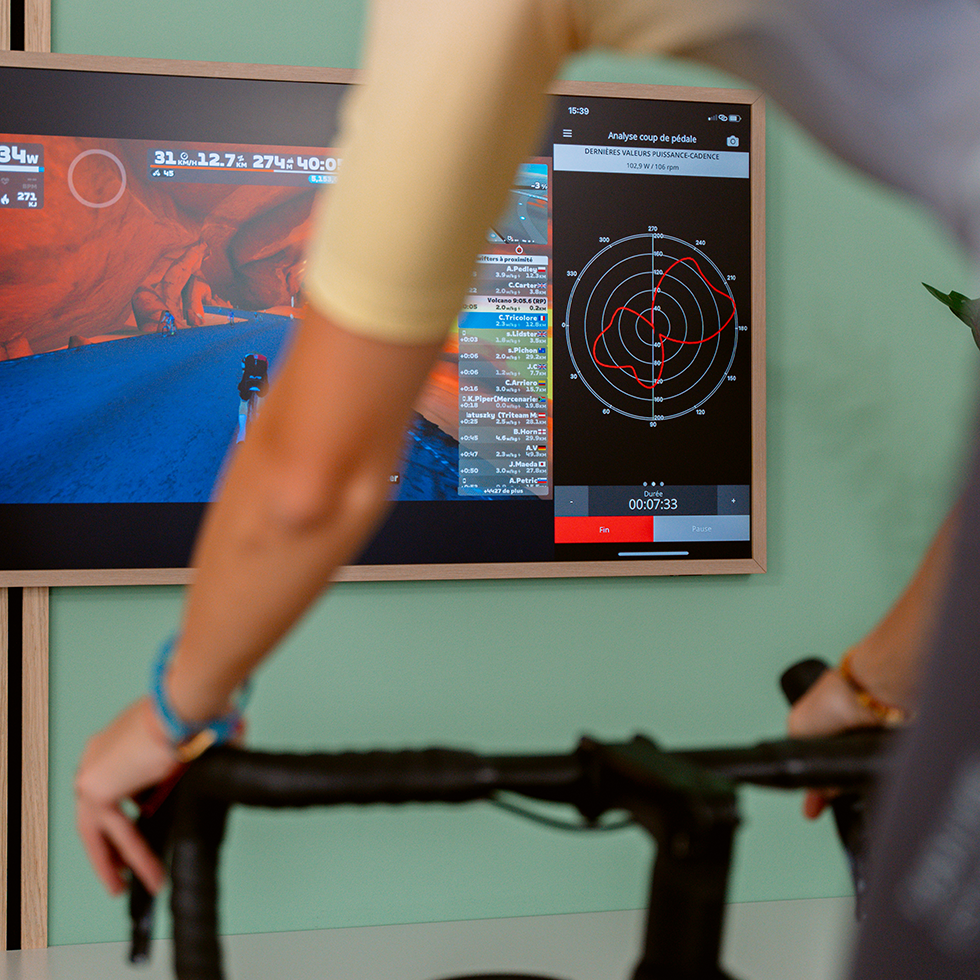
One important aspect to consider is mental fatigue: indoor cycling is often perceived as “harder” at the same physical effort, due to monotony and the lack of external stimuli (even when using apps). As a result, it becomes more difficult to maintain focus over long periods. Overly long indoor sessions challenge not only the body but especially the mind, reducing the motivation to train because they are seen as too demanding.
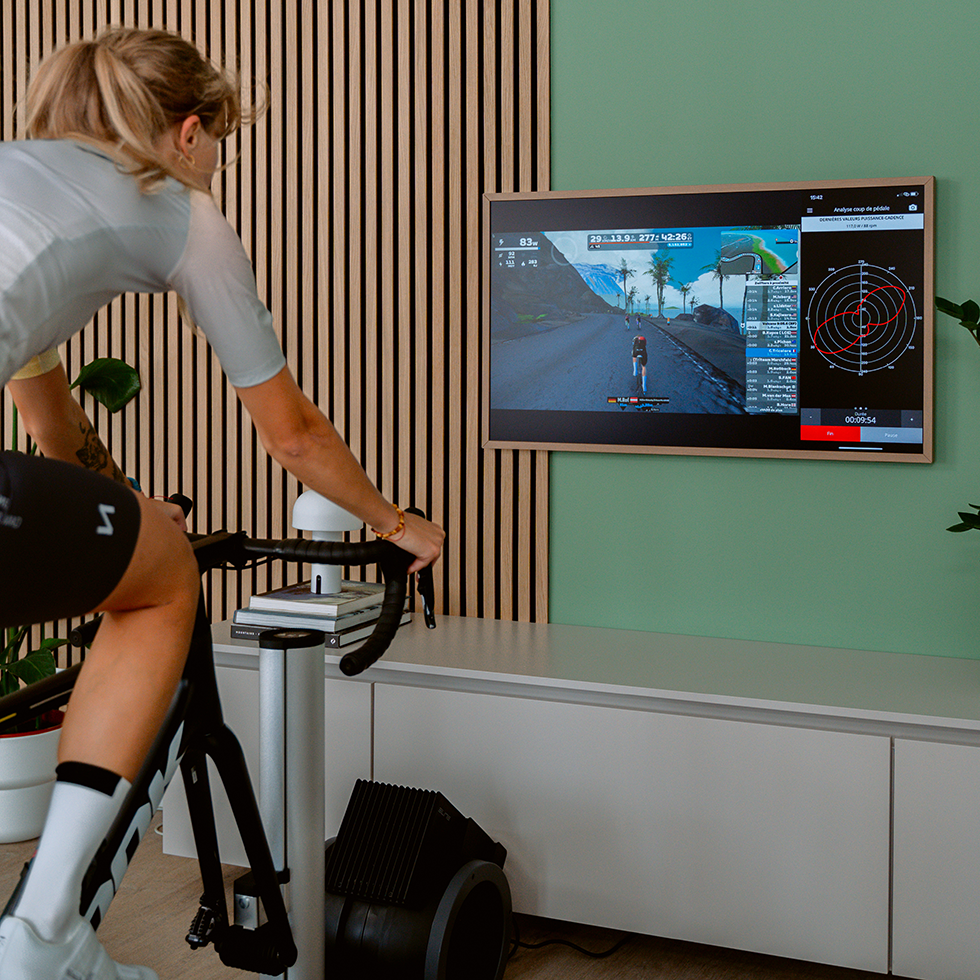
The recommendation is to alternate drills, intervals, cadence changes, or to use platforms like Zwift or Rouvy to increase fun and variability.
Recommended weekly frequency
When training on the trainer, frequency matters: for those training 3–4 times per week, it can be helpful to alternate:
- 2 short sessions (around 40 minutes) at high intensity (HIIT or threshold). For example:
30–45‑minute indoor HIIT sessions (which lead to significant improvements in VO₂max and FTP) or sprint interval training such as 6×30" all‑out with 4 minutes rest (which offers improvements similar to longer traditional programs). - 1–2 longer sessions (60–90 minutes) at low intensity.
Most studies show that training frequency is more important than session duration when it comes to maintaining fitness in indoor cycling.
Conclusion
“Longer” does not always mean “more effective.” In the indoor environment, sessions longer than 90 minutes:
- Increase the risk of dehydration
- Reduce concentration
- Can lower overall training quality
We should remember that the only time that truly counts is the time spent at a meaningful training intensity. Beyond a certain point, effectiveness drops. This is why the effectiveness of an indoor session is determined not by its duration, but by the quality of the time spent on the bike.
A well‑designed 45–60‑minute session can deliver excellent results, as long as it is calibrated around intensity, objectives, and recovery.
In short: better less time, well used, than long, monotonous, and ineffective rides.
References
Bianco, A., Bellafiore, M., Battaglia, G., Paoli, A., Caramazza, G., Farina, F., & Palma, A. (2010). The effects of indoor cycling training in sedentary overweight women. Journal of Sports Medicine and Physical Fitness, 50(2), 159–165.
Hwang, C.-L., Lim, J., Yoo, J.-K., Kim, H.-K., Hwang, M.-H., Handberg, E. M., Petersen, J. W., Holmer, B. J., Casella, J. A. L., Cusi, K., & Christou, D. D. (2019). Effect of all-extremity high-intensity interval training vs. moderate-intensity continuous training on aerobic fitness in middle-aged and older adults with type 2 diabetes: A randomized controlled trial. Experimental Gerontology, 116, 46–53. https://doi.org/10.1016/j.exger.2018.12.013
Zhang, D., Janjgava, T., Boutcher, S. H., & Boutcher, Y. N. (2019). Cardiovascular response of postmenopausal women to 8 weeks of sprint interval training. European Journal of Applied Physiology, 119(4), 981–989. https://doi.org/10.1007/s00421-019-04087-9
Hickson, R. C., Hagberg, J. M., Ehsani, A. A., & Holloszy, J. O. (1981). Time course of the adaptive responses of aerobic power and heart rate to training. Medicine and Science in Sports and Exercise, 13(1), 17–20. https://doi.org/10.1249/00005768-198101000-00012
Burke, J., Thayer, R., & Belcamino, M. (1994). Comparison of effects of two interval-training programmes on lactate and ventilatory thresholds. British Journal of Sports Medicine, 28(1), 18–21. https://doi.org/10.1136/bjsm.28.1.18
Chavarrias, M., Carlos-Vivas, J., Collado-Mateo, D., & Pérez-Gómez, J. (2019). Health benefits of indoor cycling: A systematic review. Medicina (Kaunas), 55(8), 452. https://doi.org/10.3390/medicina55080452
Caria, M. A., Tangianu, F., Concu, A., Crisafulli, A., & Mameli, O. (2007). Quantification of Spinning® bike performance during a standard 50-minute class. Journal of Sports Sciences, 25(4), 421–429. https://doi.org/10.1080/02640410600718533