Elite Trainers. 45 Years of Indoor Revolution
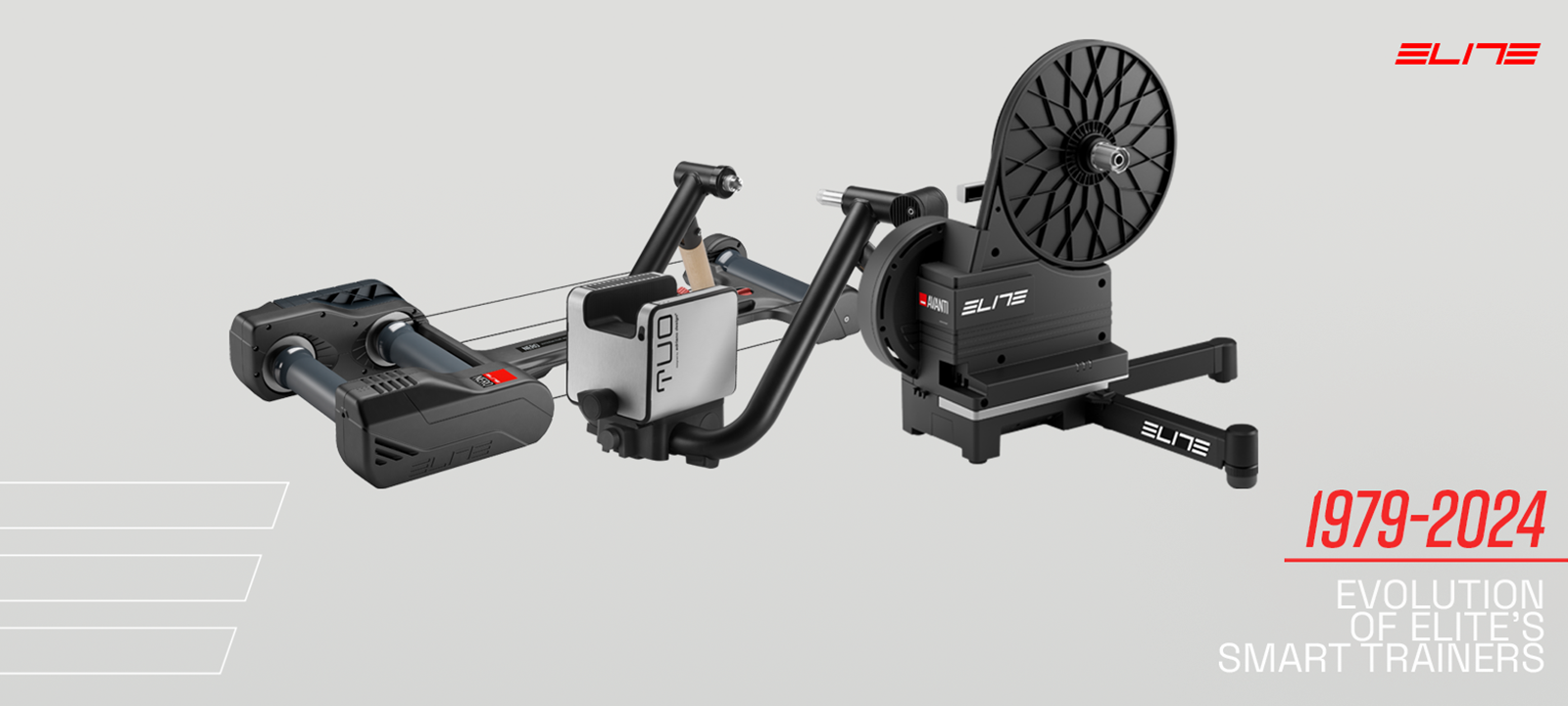
The release of Elite’s latest smart trainer, the Justo 2, marks the pinnacle of a journey that has lasted 45 years and shows no sign of stopping. “We have been specializing in R&D, production and marketing of home trainers, bottles and bottle cages since 1979”, Elite said.
It has been a journey that has seen Elite evolve and, in turn, supply their products to the leading teams within the Pro-Cycling peloton, which includes UAE Team Emirates.
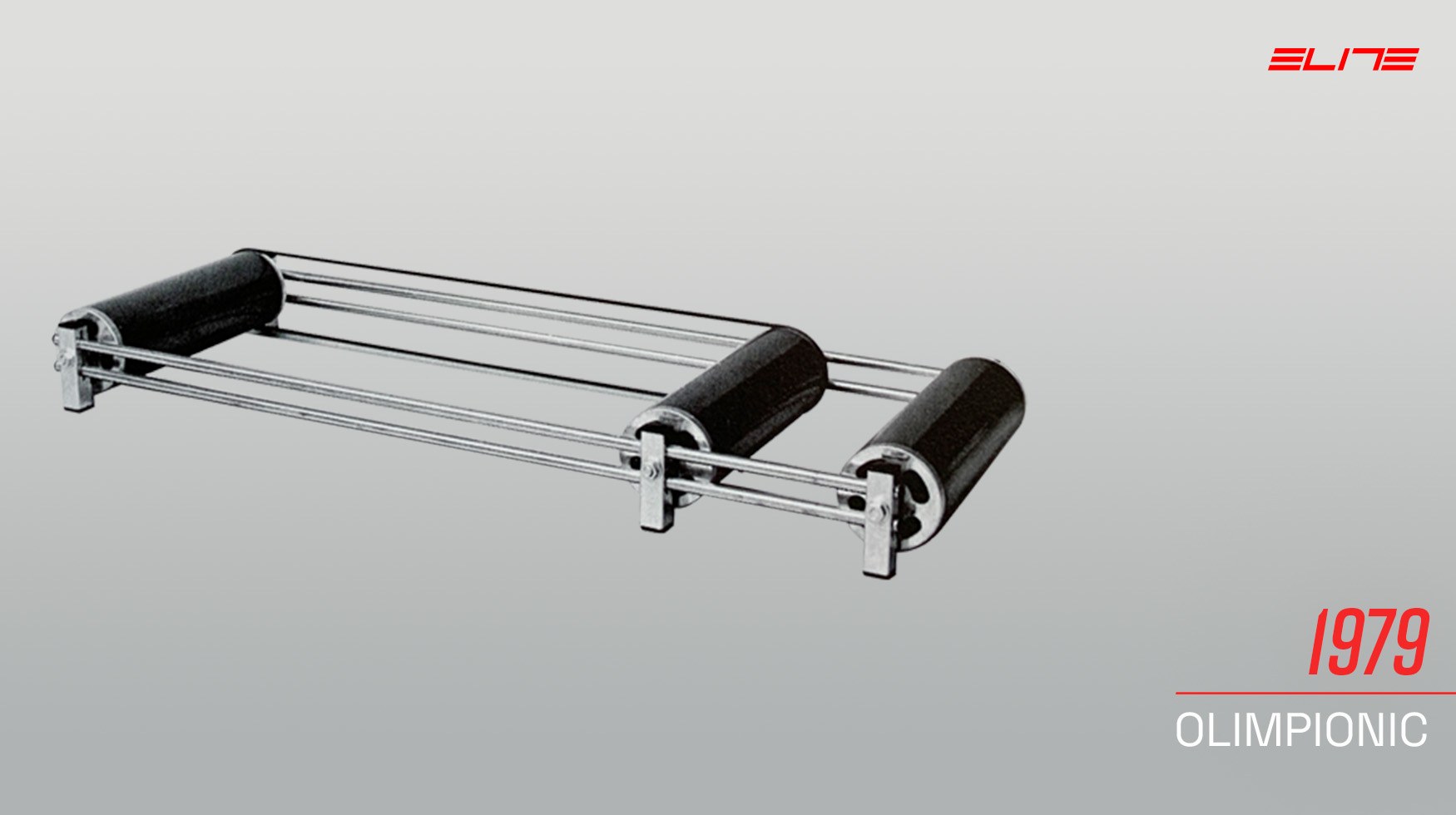
Early trainers
Elite’s first offering was the Olimpionic and was a set of rollers, which you would place your bike on, then mount and pedal. This requires a significant amount of balance and the design of which has barely altered, and is the simplest type of trainer.
1982 saw the first trainer where you could mount your bike to it and it consisted of a frame which secured your bike and you simply pedalled. This method is referred to as a “wheel-on” trainer because the rear wheel remains connected to the bike and sits on the roller. Elite’s first wheel-on trainer worked without resistance.
10 years later, in 1992, the first wheel-on trainer with controllable resistance was launched and was called the Travel Mag. This had the fundamental look of today’s modern smart trainer. The bike was secured via the rear axle and the resistance provided by the roller was adjusted via a cable connected to the resistance unit.
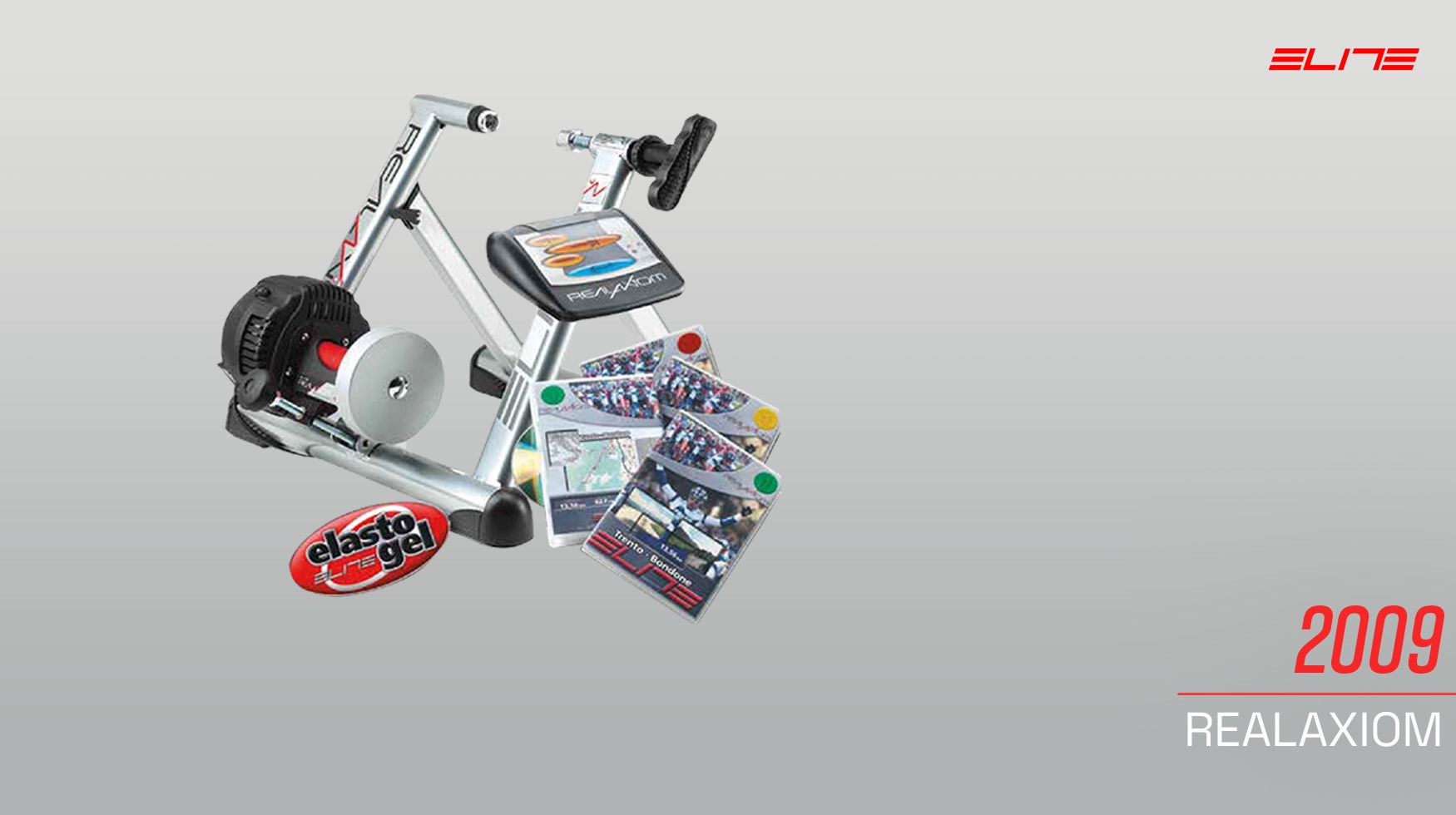
Digital revolution
The year 2000 marked the start of a new era for indoor trainers as the digital revolution had officially begun. The Axiom PowerTrainer was Elite's first PC-connected trainer designed for a more professional and interactive training approach and launched that year.
Nine years later came the RealAxiom, a trainer that used films of the world's most renowned races to create one of the first interactive experiences.
Following on from this came the Forte. This trainer was important because it was the world’s first wireless digital trainer and was released in 2011. It had a two-way ANT-coded head unit that allowed control of the trainer from the handlebars, eliminating the need for a cable to control the resistance. The head unit displayed a wide range of data such as wattage, cadence and heart rate.
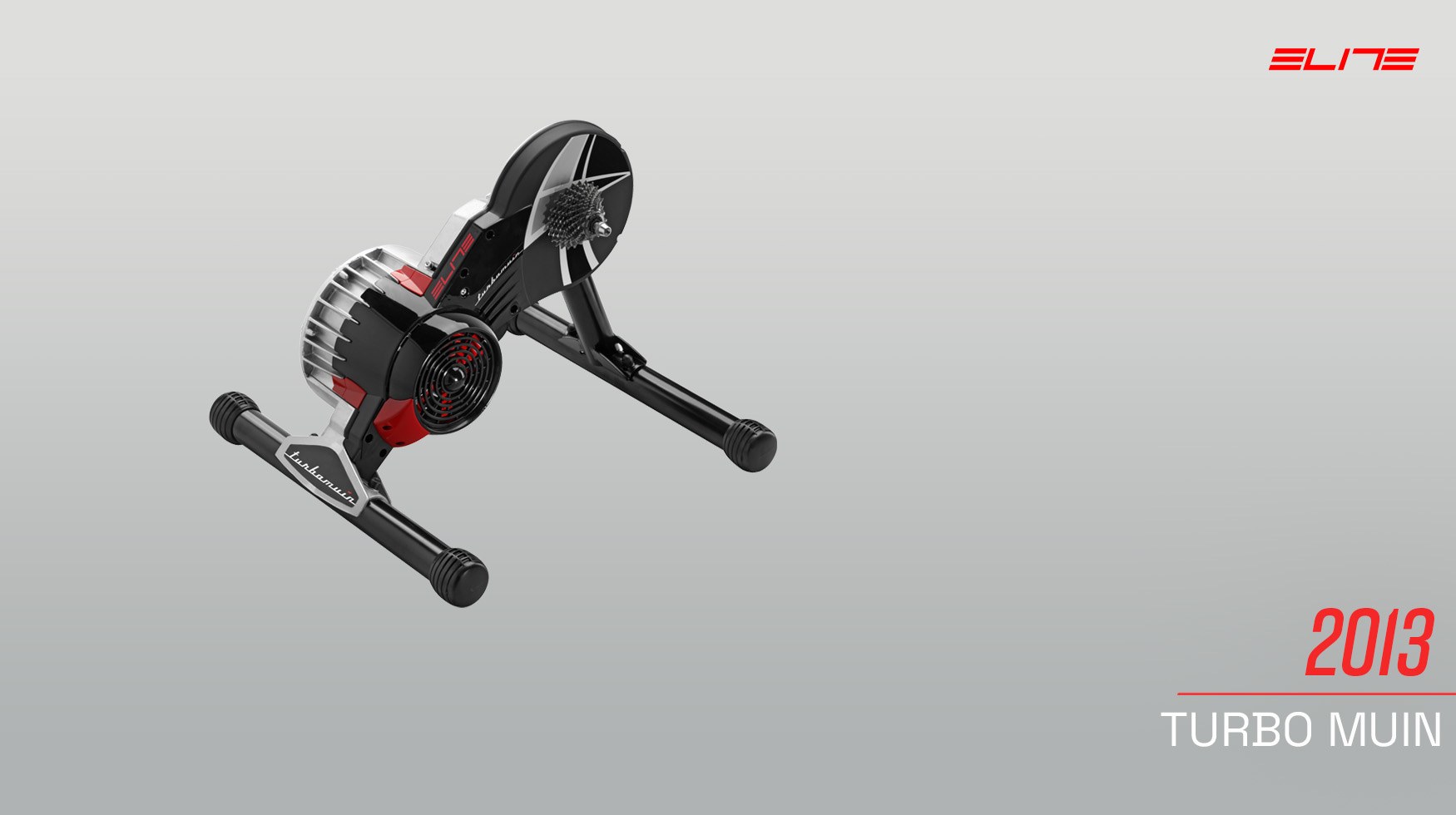
The first direct-drive trainer
The Turbo Muin was the next significant advancement in 2013. At the time, it was Elite’s most advanced trainer and the first “direct drive,” trainer, coming to market years ahead of others. It used fluid technology to generate resistance.
This was the start of the era of the direct drive trainer, where the rear wheel is removed and the trainer is connected directly to the bike’s drivetrain.
Taking the Turbo Muin Fluid Elite fitted it with a sensor called Misuro Blu+, a Bluetooth and ANT+ sensor which transmitted speed and cadence information to your compatible smartphone or bike computer, allowing you to pair the trainer with Elite's My E-Training app or other third-party services like Zwift or TrainerRoad. This trainer was called the Turbo Muin Smart B+.
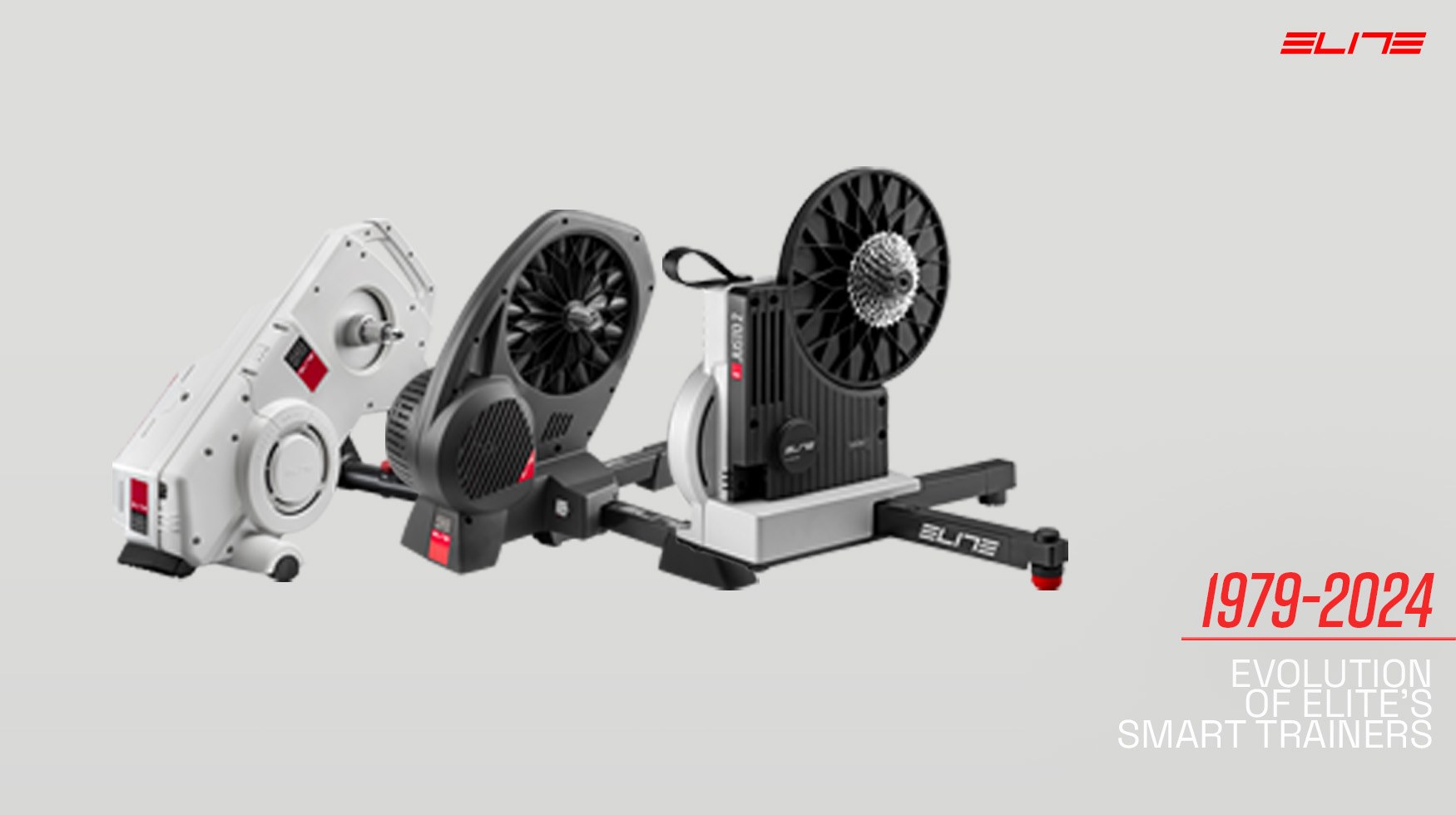
Evolution
Up to this point, the Axiom PowerTrainer and Forte were classed as “interactive trainers,” whilst the Turbo Muin Smart B+ was the first iteration of a “smart trainer”; it did not automatically change the resistance, but this functionality would soon come.
The next big step came in the form of the Drivo model, in 2016. It had a certified power accuracy in watts, to a level of ±0.5% and at the time, was the only smart trainer for the home with that level of accuracy. Resistance would adjust automatically when connected to third-party apps like Zwift replicating the image and gradient on screen.
The Direto followed shortly in 2017 and at the time of its release, was the only direct drive trainer to cost less than $1000. The power meter used was based on an optical sensor technology that measures the torsion of the trainer axis and on sophisticated electronics processing. This was called the Optical Torque Sensor (OTS) and had an accuracy of ±2.5%.
In 2021 the Direto XR-T was launched which was an upgrade to its predecessor, it utilised the OTS, and the accuracy had been improved to ±1.5% and could simulate gradients up to 24%.
Elite’s most advanced trainer, the Justo, came the following year and was their most advanced trainer with new, more sensitive sensors that improved the overall accuracy to ±1%, especially in low torque conditions, allowing the trainer to simulate lower slope gradients at high speed. Recently released, the Justo 2, which has new Wi-Fi functionality that enhances the trainer's connectivity, integrates with ANT+™ FE-C and Bluetooth® protocols as well as a power meter that offers precise accuracy equivalent to the Drivo, making this Elite’s most accurate trainer on the market today. In addition to this, it comes with a 12-speed cassette already installed, meaning that the trainer is ready to use out of the box.